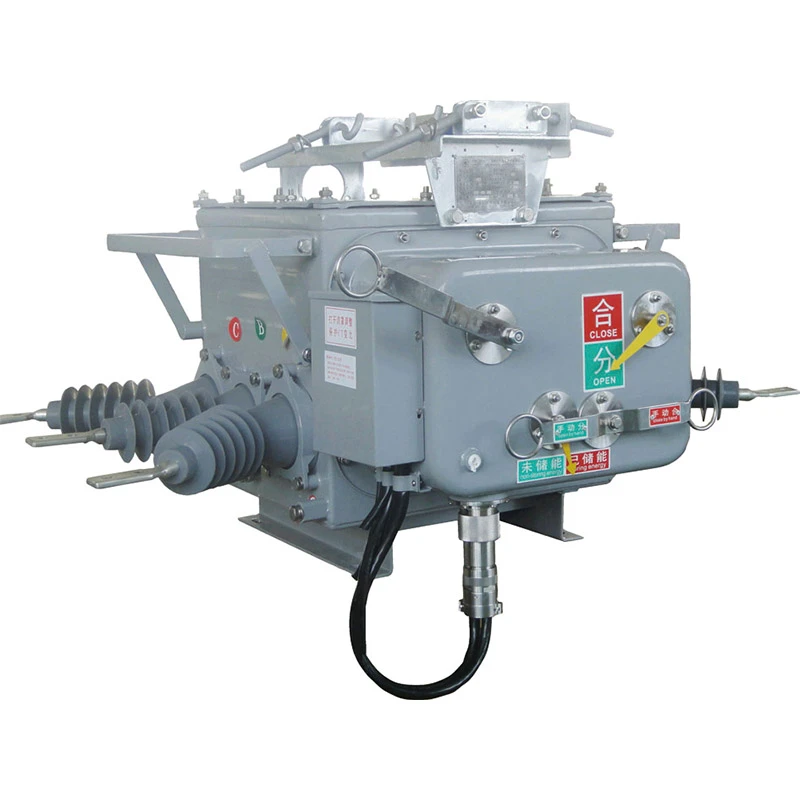
The installation and use of AC high-voltage circuit breakers must meet specific environmental conditions, including ambient air temperature, altitude, wind speed, ambient humidity, earthquake resistance, creepage distance, icing, and protection requirements. Specific parameters such as outdoor temperature range, altitude adaptability level, wind speed limits, humidity requirements, acceleration corresponding to seismic intensity, creepage distance for different pollution levels, and icing thickness are all clearly defined. For example, altitudes of 1000m and below are considered conventional operating areas, while 1000–3000m requires special consideration; after external insulation modification, it can now operate at an altitude of 2700m. Outdoor products must be able to withstand wind speeds not exceeding 35m/s, specific humidity levels, and different levels of icing, and possess moisture-proof, cold-proof, and dust-proof protection capabilities.
In addition to basic environmental tolerance, for circuit breakers with long service lives or frequent operation, attention should be paid to the reliability of their operating mechanisms (such as springs and hydraulic systems), and regular mechanical characteristic tests (such as opening and closing speeds, times, and synchronicity) should be performed to prevent failures due to component fatigue or wear.
With technological advancements, intelligent operation and maintenance methods based on online monitoring and data analysis are becoming increasingly important. For example, by collecting real-time electrical characteristics of the load (such as broadband complex impedance spectra), predictive identification of potential circuit breaker faults can be achieved. Simultaneously, monitoring the electrical life and mechanical characteristics of circuit breaker contacts helps shift from planned maintenance to condition-based maintenance, extending equipment lifespan and improving operational reliability.
When selecting new circuit breaker models for capacity expansion, compatibility with the existing substation layout and foundation should be considered. New products with the same appearance and interface dimensions can be replaced in situ, thereby shortening the replacement period and reducing the impact of power outages.